


Running a WooCommerce store means constantly finding ways to keep your customers engaged after they place an order.
And email marketing is one of the easiest ways to do that. You can welcome new customers, recover abandoned carts, follow up after purchases, promote products, and bring old customers back again.
Now, to manage all of this, you need a good email marketing and automation platform.
And Ontraport is one of the options that can handle it. It brings email marketing, CRM, sales automation, landing pages, and other tools together in one place.
But if you are here, you are probably trying to find out if there are other options that might fit your business better.
Frankly speaking, Ontraport is still a capable platform. But your needs can change as your store grows. You may want something simpler, more focused on ecommerce, stronger in segmentation, or better suited to the way you manage your customers and sales.
Well, today, we decided to take a closer look at 10 Ontraport alternatives and see what each one has to offer.
Hopefully, by the end, you’ll have a much clearer idea of which one fits your business.
What Is Ontraport and What Are the Pros and Cons of Ontraport?
Ontraport is an all-in-one business automation platform that brings CRM, email marketing, landing pages, membership sites, and marketing automation into one system.
It’s mainly built for businesses that manage a sales process alongside their marketing. Think course creators, coaches, agencies, and B2B teams that need to track leads and deals as well as send emails.
For a WooCommerce store, that can be more than you need. WooCommerce already keeps track of your products, orders, and customers. What you may need is a way to use that data for abandoned cart emails, post-purchase follow-ups, and other automated campaigns.
Ontraport can handle those workflows, but they’re part of a much broader CRM platform. If you mainly need WooCommerce email automation, you may end up paying for CRM and sales features you rarely use.
Pros and Cons of Ontraport
Ontraport gives you a lot in one place, especially if CRM and sales pipeline management are important to your business.
The trade-off is a steeper learning curve and a setup that may feel heavy for a WooCommerce store focused mainly on email automation.
| Pros | Cons |
|---|---|
| Combines CRM, email, and landing pages in one login | Takes time to learn, especially the automation builder |
| Deep contact and pipeline tracking for sales-driven businesses | Built and priced around CRM-heavy use cases |
| Landing page and membership site builder included | WooCommerce data needs to sync through an integration |
| Mature platform with 19+ years in the market | Support response times are cited as slow in some user reviews |
| Handles complex, multi-stage sales pipelines well | Can be more than a single-store owner needs for cart recovery and post-purchase emails |
Good to Know: Ontraport makes more sense when you need CRM, sales pipeline management, and marketing automation in the same platform. If your main goal is WooCommerce email automation, cart recovery, and post-purchase follow-ups, you may not need all of those additional CRM features.
Now, let’s look at the 10 Ontraport alternatives and see what each one can offer your WooCommerce store.
By the end, you’ll have a clearer idea of which tool fits your store, workflow, and budget.
Find the Best Ontraport Alternative in 30 Seconds Based on Your Goal
Every tool on this list solves a different problem. Take a quick look at the table below and find the one that best matches what you’re trying to achieve.
| If your goal is… | Best tool | Why |
|---|---|---|
| Increase sales and repeat purchases from your WooCommerce store | Mail Mint | Native WooCommerce automation helps you run cart recovery, post-purchase, and customer behavior campaigns |
| Improve ecommerce targeting with more predictive customer data | Klaviyo | Uses purchase history, browsing behavior, and predictive data for more targeted campaigns |
| Manage customer relationships and sales alongside marketing | HubSpot | Combines email marketing with CRM, deal tracking, and support tools |
| Simplify your email marketing setup | Constant Contact | Offers a straightforward email builder with basic automation and an easier setup |
| Manage sales and follow up through phone and text | Keap | Combines sales pipeline management with phone and SMS outreach |
| Reduce email marketing costs as your list grows | Brevo | Charges based on email volume rather than the number of contacts you store |
| Keep webinars as part of your marketing strategy | GetResponse | Combines email marketing with webinar hosting on specific plans |
| Manage customer relationships without paying for a large CRM platform | EngageBay | Combines CRM, marketing, and support features with a free tier |
| Reach ecommerce customers across email, SMS, and push | Omnisend | Brings ecommerce-focused email, SMS, and push notifications into the same platform |
The quick comparison gives you the direction. Now let’s look at each alternative in more detail, starting with what it can actually do for your WooCommerce store.
10 Best Ontraport Alternatives for WooCommerce Email Marketing
Each of these earns its place for a specific reason. None is “the best” in every situation. The goal is matching the tool to what you actually need, whether you’d describe your search as looking for affordable Ontraport alternatives or something closer to a straight feature-for-feature swap.
1. Mail Mint – Email Marketing, Automation & WooCommerce Emails with AI Assistance
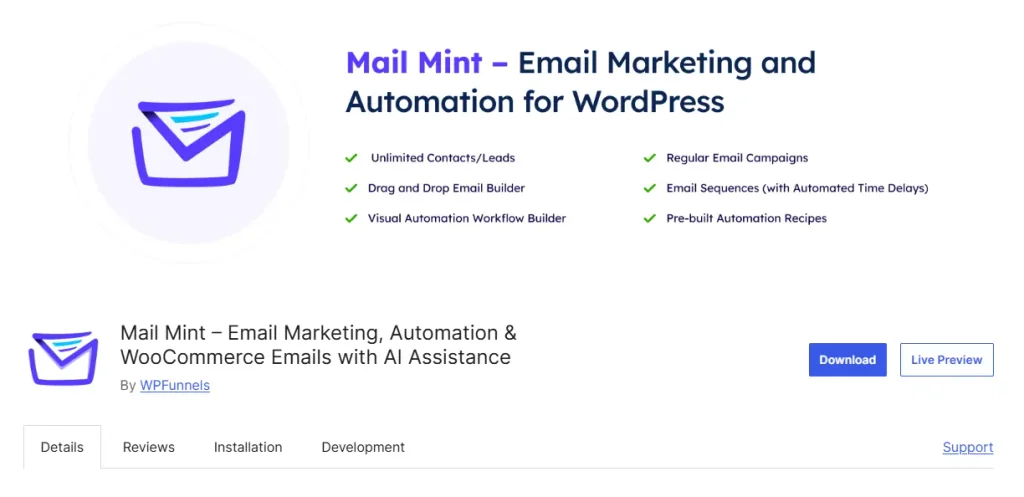
Mail Mint is a self-hosted, AI-powered email marketing and automation plugin for WordPress and WooCommerce.
It helps online stores increase sales and drive repeat purchases through targeted email campaigns, automated customer journeys, and WooCommerce-focused marketing.
You can create email campaigns, segment customers, and build automation workflows directly from your WordPress dashboard. Mail Mint supports promotional campaigns, welcome emails, abandoned cart recovery, post-purchase follow-ups, and behavior-based campaigns.
Mail Mint’s advantage over Ontraport is its focus on the core email marketing tasks a WooCommerce store needs, including order-triggered automation, abandoned cart recovery, post-purchase campaigns, and transactional email customization. It runs inside WordPress with unlimited contacts and flat annual pricing.
Its AI Email Engine can create complete email campaigns, build automation workflows, analyze campaign performance, and promote WooCommerce products through conversational instructions.
The pricing difference is clear. Ontraport’s Plus plan costs $113/month for 1,000 contacts, or $1,350/year, while Mail Mint’s Starter plan costs $149.99/year with unlimited contacts on every tier, including the free version.
How Mail Mint Helps You Recover More Lost Sales
- Recover abandoned carts: Track abandoned carts and send automated follow-ups with product details and coupons.
- Automate customer follow-ups: Create workflows based on orders, order status, and customer activity.
- Promote WooCommerce products: Add products directly to email campaigns using the dedicated product block.
- Increase repeat purchases: Run post-purchase, upsell, cross-sell, and win-back campaigns.
- Nurture leads: Capture leads, organize contacts with lists and tags, and send targeted campaigns.
Pros and Cons of Mail Mint
Mail Mint brings lead management, email campaigns, automation, and WooCommerce marketing into WordPress. Advanced WooCommerce triggers and segmentation are available with Pro.
| Pros | Cons |
|---|---|
| Flat annual pricing with unlimited contacts | Advanced WooCommerce triggers require Pro |
| Self-hosted inside WordPress | Advanced segmentation requires Pro |
| Visual email and automation builders | Requires an external SMTP service |
| WooCommerce product promotion | WordPress and WooCommerce focused |
| Abandoned cart recovery | |
| Customizable WooCommerce emails | |
| AI Email Engine |
Mail Mint Pricing
Mail Mint offers a free version and paid plans with unlimited contacts on every tier.
| Free | Starter | Business | Agency |
|---|---|---|---|
| $0 (core builder + lead automation) | $149.99/year | $399.99/year | $599.99/year |
No contact limits on any tier, including the free version.
Quick Comparison: Ontraport vs Mail Mint
Ontraport combines CRM and marketing automation, while Mail Mint focuses on email marketing, WooCommerce automation, and lead management inside WordPress.
| Mail Mint | Ontraport | |
|---|---|---|
| Best for | Native WooCommerce automation at flat cost | All-in-one CRM and sales pipeline |
| WooCommerce marketing | Direct database reads | Synced via integration |
| Contact pricing | Flat, unlimited | Pricing increases with contact volume |
| Annual price (1,000 contacts) | $149.99/year | $1,350/year for Plus at 1,000 contacts |
| Data & hosting | Self-hosted, your own server | Cloud-hosted |
| CRM & sales pipeline | Lightweight contact management | Full CRM and sales pipeline capabilities |
| Abandoned cart & order automation | Native, direct reads | Via sync |
| Transactional emails | Customizable WooCommerce emails included | Included |
The comparison gives you the main differences. Now let’s look at the next Ontraport alternative and see where it fits for WooCommerce stores.
Bottom Line: If you mainly need WooCommerce email marketing, automation, abandoned cart recovery, and repeat-purchase campaigns, Mail Mint gives you those tools inside WordPress with unlimited contacts. Ontraport costs $1,350/year for 1,000 contacts on the Plus plan and adds broader CRM and sales automation capabilities.
2. ActiveCampaign – Deep Automation Logic Without the CRM Weight
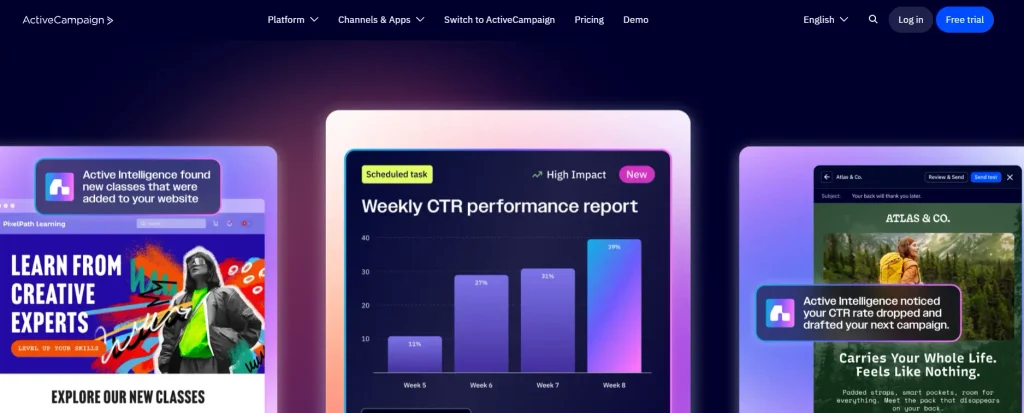
ActiveCampaign built its reputation on one thing: automation branching that actually holds up under complexity. If you’ve outgrown simple triggered emails and need sequences that split multiple ways based on what a customer clicked, bought, or ignored, ActiveCampaign’s builder is one of the few here that won’t fight you at that depth.
That depth has a cost beyond the invoice. ActiveCampaign doesn’t read your WooCommerce order table directly. It connects through an integration, which means there’s a sync layer between your store and every automation you build. For most sequences, that’s a minor delay. For time-sensitive ones, like cart recovery, that lag is the difference between catching the customer and missing them.
Where ActiveCampaign Pulls Ahead of Ontraport
- Conditional branching that actually branches: automations can split on multiple conditions at once.
- Hundreds of pre-built recipes: you’re rarely starting from a blank canvas.
- Predictive sending: the platform learns when individual contacts actually open email.
- Deep tagging and segmentation: contacts can carry dozens of tags without the interface becoming unusable.
Good to Know: ActiveCampaign’s automation builder has a real learning curve of its own. Budget onboarding time the same way you would with Ontraport.
Pros and Cons of ActiveCampaign
| Pros | Cons |
|---|---|
| One of the deepest conditional automation engines available | No permanent free plan, only a 14-day trial |
| Strong, consistently cited email deliverability | WooCommerce connection runs through an integration, not native |
| Hundreds of pre-built automation recipes | Per-contact pricing climbs at a similar rate to Ontraport’s |
| Wide native integration library | CRM and deal pipeline gated to higher tiers |
ActiveCampaign Pricing
ActiveCampaign’s pricing scales with your contact count rather than staying flat, so the entry price and the price at real scale look quite different.
| Plus | Professional | Enterprise | |
|---|---|---|---|
| $19/mo (1,000 contacts) | $49/mo (1,000 contacts) | $79/mo (1,000 contacts) | Custom |
Quick Comparison: Ontraport vs ActiveCampaign
Both charge similarly at the entry tier, and both connect to WooCommerce via integration rather than natively.
| ActiveCampaign | Ontraport | |
|---|---|---|
| Best for | Advanced behavior-based automation | CRM-heavy sales and marketing combined |
| WooCommerce data | Via integration | Via sync/integration |
| Contact pricing | Per contact, climbs quickly | Per contact + per user |
| Annual price (1,000 contacts) | ~$948/year (Professional) | $1,350/year (Plus) |
| CRM & sales pipeline | Add-on, higher tiers only | Included |
| Automation depth | Very high, conditional branching | High, pipeline-oriented |
Pro Tip: if you’re choosing between these two, the real question is whether you need Ontraport’s CRM at all. If you don’t, ActiveCampaign gets you deeper automation for less.
Bottom Line: ActiveCampaign is the right move if your Ontraport frustration is about automation logic, not cost.
Good to Know: if ActiveCampaign is itself the tool you’re weighing options against, our ActiveCampaign alternatives guide covers the WooCommerce-native options in more detail.
Next up is a tool built around a completely different kind of data: what your customers actually buy.
3. Klaviyo – Built Around Purchase Data, Not Contact Lists
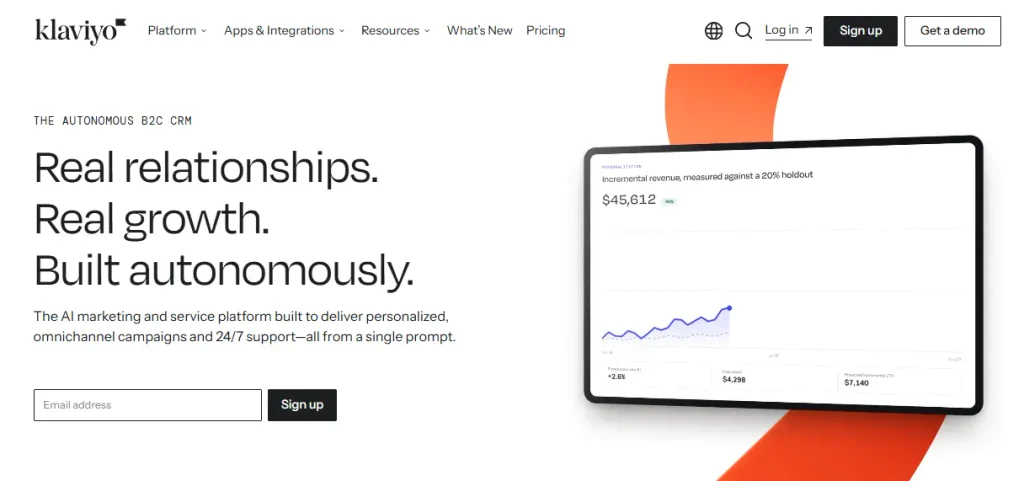
Most email platforms segment on what you tell them: list membership, tags, form fills. Klaviyo segments on what customers actually do: what they bought, how often, and how likely they are to churn soon. For a store where generic segments feel too blunt, that’s a real step up.
The catch is billing. Klaviyo charges by active profiles, not stored contacts, so a large but mostly quiet list can cost more than expected. Your customer data also lives on Klaviyo’s servers, synced from your store rather than read from it.
What Klaviyo Actually Does With Your Data
- Predicted lifetime value: segments built around who’s likely to be a repeat buyer.
- Churn-risk flags: customers trending toward going quiet get surfaced automatically.
- Composer, its AI assistant: drafts campaign copy and flows from a plain-language prompt.
- Native SMS alongside email, run from the same customer profiles.
For Example: a store selling a $60 skincare product with a 45-day repurchase cycle can build a flow that fires around day 40, targeted at customers whose behavior says they’ll actually reorder. Ontraport can build a timed sequence too, but without the purchase-pattern data behind it, the timing is a guess rather than a known pattern.
Pros and Cons of Klaviyo
| Pros | Cons |
|---|---|
| Purpose-built ecommerce segmentation and predictive analytics | Billed on active profiles, not raw contact count |
| Native SMS and email from one dashboard | Data lives on Klaviyo’s platform, not your own server |
| Strong revenue attribution reporting | Can be more platform than a smaller store needs |
| AI campaign and flow generation | No native CRM or sales pipeline |
Klaviyo Pricing
Klaviyo’s free plan covers a small list, and paid pricing scales with how many active profiles you have, not how large your full contact list is.
| Free | 500 Profiles | 1,000 Profiles | 10,000 Profiles |
|---|---|---|---|
| Up to 250 active profiles | ~$20/month | ~$30/month | ~$150/month |
Quick Comparison: Ontraport vs Klaviyo
Ontraport wasn’t built around ecommerce purchase data the way Klaviyo was, so for pure ecommerce segmentation, Klaviyo is the stronger match.
| Klaviyo | Ontraport | |
|---|---|---|
| Best for | Ecommerce segmentation and predictive data | CRM-heavy sales and marketing combined |
| WooCommerce data | Native extension (synced) | Via sync/integration |
| Billing model | Per active profile | Per contact + per user |
| Annual price (10,000 profiles) | ~$1,800/year | $3,560/year (Plus, 10,000) |
| CRM & sales pipeline | Not included | Included |
| Predictive analytics | Built in | Not available |
Neither tool reads WooCommerce data natively the way a WordPress plugin does. Both sync from outside your store, just for different purposes.
Remember: at low contact counts, Ontraport can actually come in cheaper. Klaviyo earns its price at scale, once there’s enough purchase history for predictive segments to mean something.
Bottom Line: pick Klaviyo when the bottleneck is genuinely ecommerce data depth, not automation volume.
Good to Know: if AI-assisted campaign building is the specific draw, our breakdown of AI email automation tools compares that angle across platforms.
If your store also runs a sales team behind the scenes, though, neither of these solves that.
4. HubSpot – A Real Free CRM, With a Steep Ladder Above It
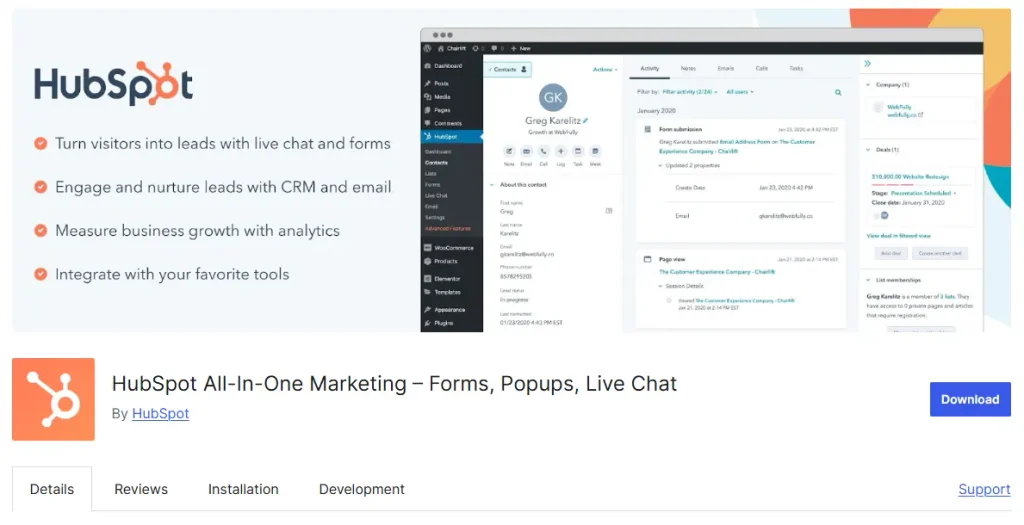
HubSpot’s free CRM tier isn’t a stripped-down trial. It’s a genuinely usable starting point, one plenty of small teams run on for a year or more before paying anything. If your WooCommerce store has a side that looks more like sales than ecommerce, wholesale inquiries, B2B accounts, a support queue, HubSpot’s combination of free CRM and paid marketing tools covers ground Ontraport was also built for.
The honest problem is the ladder above that free tier. The jump to professional-tier marketing automation is steep, in price and in what it assumes about your business.
Where HubSpot Fits If You Also Run Sales
- Free CRM with deal tracking: contacts, companies, and deals live in one pipeline view at no cost.
- Certified WooCommerce integration: order data syncs into contact records.
- Breeze, its AI content assistant: drafts campaign copy inside the same dashboard.
- Revenue-linked reporting: marketing performance ties directly to closed deals.
Good to Know: most WooCommerce stores that try HubSpot use the free CRM for months and never touch the paid marketing tiers. If that describes you, the free plan alone might already do the job.
Pros and Cons of HubSpot
| Pros | Cons |
|---|---|
| Free CRM tier is genuinely usable long-term | Professional-tier marketing automation is expensive |
| Connects email performance to deal and revenue data | One-time onboarding fee at Professional tier |
| Wide partner and integration ecosystem | More platform than a WooCommerce-only store typically needs |
| AI content assistant included | Real learning curve past basic use |
HubSpot Pricing
HubSpot’s Marketing Hub runs free at the CRM level, then jumps sharply once you need real marketing automation.
| Free CRM | Starter | Professional |
|---|---|---|
| $0/month | ~$20/month per seat | ~$800/month + $3,000 onboarding fee |
Quick Comparison: Ontraport vs HubSpot
Both are CRM-first platforms with email as one module rather than an email-first tool.
| HubSpot | Ontraport | |
|---|---|---|
| Best for | Sales pipeline plus marketing, free to start | CRM-heavy sales and marketing combined |
| WooCommerce data | Via certified integration | Via sync/integration |
| Entry cost | Free (CRM only) | $1,350/year (Plus, 1,000 contacts) |
| Cost at automation scale | ~$9,600/year + onboarding | $3,560/year (Pro, 10,000 contacts) |
| CRM & sales pipeline | Included, free tier | Included, every tier |
| Landing pages | Included | Included |
HubSpot’s free CRM tier is more generous than Ontraport’s trial-only entry point, but its paid marketing automation costs considerably more once you need it.
Good to Know: if the real decision is cloud CRM versus a WordPress-native stack, our piece on WordPress email plugins versus SaaS platforms lays that out directly.
5. Keap – Built for Stores That Also Pick Up the Phone

Keap, formerly Infusionsoft, is the most expensive tool on this list, for a specific reason: it bundles a dialer and text-marketing tiers directly into the same system as email and CRM. If part of your sales process is an actual phone call or text follow-up, Keap is built around that in a way none of the email-first tools here are.
If that’s not part of your process, the price is hard to justify. Keap starts around $299 a month before you’ve used a feature beyond basic email.
What Keap Adds If You’re Already Calling and Texting Buyers
- Built-in dialer: calls log directly against a contact’s record.
- Text-marketing tiers: SMS sits inside the same automation builder as email.
- Native shopping cart and order tracking, so ecommerce data lives inside Keap itself.
- Customizable sales pipeline built for a small sales team.
Pro Tip: Before pricing Keap, be honest about whether phone and text outreach is a real part of your process today, not something you’re hoping to add later.
Pros and Cons of Keap
| Pros | Cons |
|---|---|
| Combines phone, text, and email outreach in one system | The most expensive entry point on this list |
| Native shopping cart and order tracking | Steep price for a store that only needs email automation |
| Customizable automation templates | Limited flexibility outside its built-in workflows |
| Solid reporting dashboards | No inbound marketing tools like SEO or content features |
Keap Pricing
Keap’s base plan includes two user licenses, with clear costs for anything beyond that.
| Pro | Max | Ultimate |
|---|---|---|
| $299/mo (1,500 contacts) | $359/mo (2,500 contacts) | $479/mo (2,500 contacts) |
Includes two user licenses; additional users cost roughly $39/month each.
Quick Comparison: Ontraport vs Keap
Both are CRM-first, sales-pipeline-oriented platforms aimed at a similar buyer.
| Keap | Ontraport | |
|---|---|---|
| Best for | Phone and text outreach alongside email | CRM-heavy sales and marketing combined |
| WooCommerce data | Native CRM, WooCommerce via integration | Via sync/integration |
| Entry price | $2,988/year (Pro) | $1,350/year (Plus, 1,000 contacts) |
| CRM & sales pipeline | Included | Included |
| Phone/SMS built in | Yes, native dialer and text tiers | No |
| Users included | 2 | 1 (additional at $49/mo) |
Keap adds native phone and SMS outreach that Ontraport doesn’t bundle the same way, but at a meaningfully higher starting price.
Bottom Line: Keap makes sense if you’re genuinely running outbound calls or text follow-up. If your process is entirely email-based, this is the wrong tool at the wrong price.
Good to Know: if follow-up sequencing itself, not the phone calls, is the actual draw, our guide to follow-up email automation covers that without the added cost.
6. Constant Contact – The Case for Staying Simple
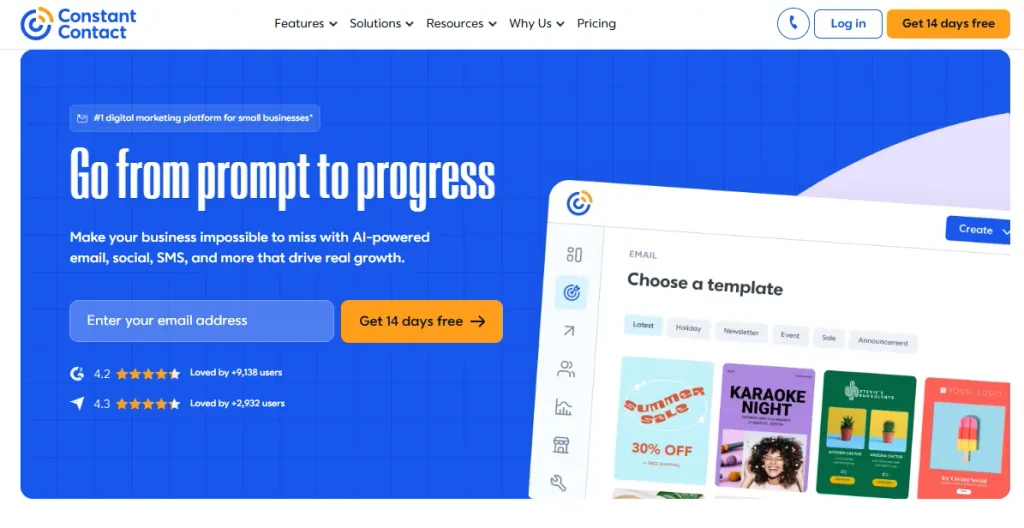
Constant Contact keeps email marketing fairly straightforward. It gives WooCommerce store owners a simple way to send clean, professional emails without spending too much time learning complex automation. If your main issue with Ontraport is its complexity, Constant Contact offers a simpler option.
There is a trade-off. Its automation is lighter than Ontraport’s, and account cancellation has been frequently reported as difficult.
Why Store Owners Still Pick Constant Contact
- Drag-and-drop builder most users can use within an hour of signing up.
- 500+ integrations, covering most tools a small store already uses.
- Basic automation for welcome series and simple triggered sends.
- Social scheduling and signup forms bundled in.
Pros and Cons of Constant Contact
| Pros | Cons |
|---|---|
| Genuinely easy to learn and use | Automation depth is limited compared to Ontraport |
| Strong phone support reputation | Account cancellation is frequently reported as difficult |
| Customizable templates | Pricing climbs with both contacts and send volume |
| Wide integration library | Not built for complex, conditional automation |
Constant Contact Pricing
Constant Contact scales in three visible tiers, all billed annually for the listed price.
| Lite | Standard | Premium |
|---|---|---|
| ~$10/month | ~$30/month | ~$68/month |
All tiers are billed annually for the listed rate; monthly billing runs slightly higher.
Quick Comparison: Ontraport vs Constant Contact
Constant Contact is meaningfully simpler and cheaper at the entry tier, but it isn’t a CRM replacement.
| Constant Contact | Ontraport | |
|---|---|---|
| Best for | Simple, reliable campaign sending | CRM-heavy sales and marketing combined |
| WooCommerce data | Via plugin | Via sync/integration |
| Entry price | ~$120/year (Lite) | $1,350/year (Plus, 1,000 contacts) |
| Automation depth | Basic | High |
| CRM & sales pipeline | Not included | Included |
| Learning curve | Low | High |
Bottom Line: Choose Constant Contact when the goal is sending good emails without a headache, not building sophisticated automation.
Good to Know: for a lighter learning curve with real automation underneath, our email marketing automation best practices piece is a useful next read.
If your actual frustration is the bill rather than the interface, the next tool prices things completely differently.
7. Brevo – Priced on What You Send, Not Who You Store
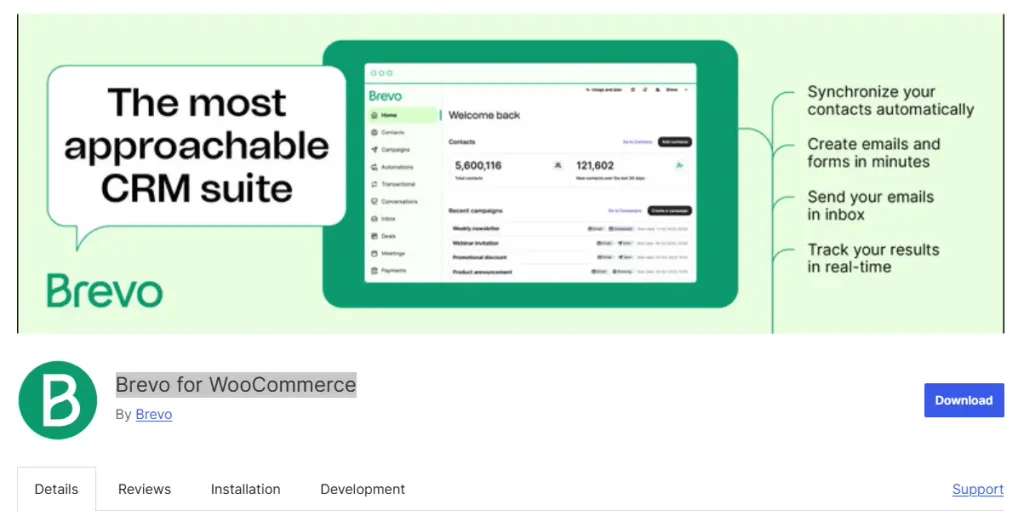
Every platform so far, Ontraport included, prices around contact count. Brevo doesn’t. It bills on email volume sent, which matters a lot for a store with a large but infrequently emailed list.
For Example: a list of 15,000 contacts emailed twice a month for major promotions, plus lighter automated sequences to smaller segments. A per-contact platform charges for all 15,000 regardless of frequency. Brevo charges based on what actually got sent, and for a low-frequency sender, that can beat even a flat-rate platform.
The trade-off is real. Brevo’s WooCommerce connection runs through a plugin, and its automation branching doesn’t approach ActiveCampaign’s or Mail Mint’s depth.
How Brevo’s Billing Works Differently
- Unlimited contacts on every tier, including free.
- Email, SMS, and WhatsApp from a single account.
- Transactional email included, not sold separately.
- AI subject-line and copy suggestions built into the campaign editor.
Pros and Cons of Brevo
| Pros | Cons |
|---|---|
| Unlimited contacts on the free plan | WooCommerce integration runs through a plugin |
| Billed on send volume, not list size | Automation branching lighter than ActiveCampaign’s or Mail Mint’s |
| Transactional email included | Entry-tier emails carry Brevo branding |
| SMS and WhatsApp on the same platform | Automation gated to Standard tier and above |
Brevo Pricing
Brevo’s free plan supports unlimited contacts, with paid tiers scaling by send volume rather than list size.
| Free | Starter | Business |
|---|---|---|
| 300 emails/day, unlimited contacts | ~$9-$30/mo by volume | ~$65/mo by volume |
Quick Comparison: Ontraport vs Brevo
If your real problem with Ontraport is the bill, and your list is large but you don’t email it constantly, Brevo’s volume-based billing can beat even a flat per-contact platform.
| Brevo | Ontraport | |
|---|---|---|
| Best for | Large lists emailed infrequently | CRM-heavy sales and marketing combined |
| WooCommerce data | Via plugin | Via sync/integration |
| Billing model | Per email sent | Per contact + per user |
| Contact limits | None, any tier | Scales with plan |
| Automation depth | Standard | High, pipeline-oriented |
| CRM & sales pipeline | Not included | Included |
Bottom Line: Brevo is the direct fix if Ontraport’s bill is the problem and your list is large but not constantly emailed.
Good to Know: if the real appeal is escaping per-contact SaaS pricing altogether, our comparison of self-hosted email marketing plugins goes a step further.
Webinars are one more piece Ontraport doesn’t touch, and the next tool builds its pitch around that gap.
8. GetResponse – The One With Webinars Built In
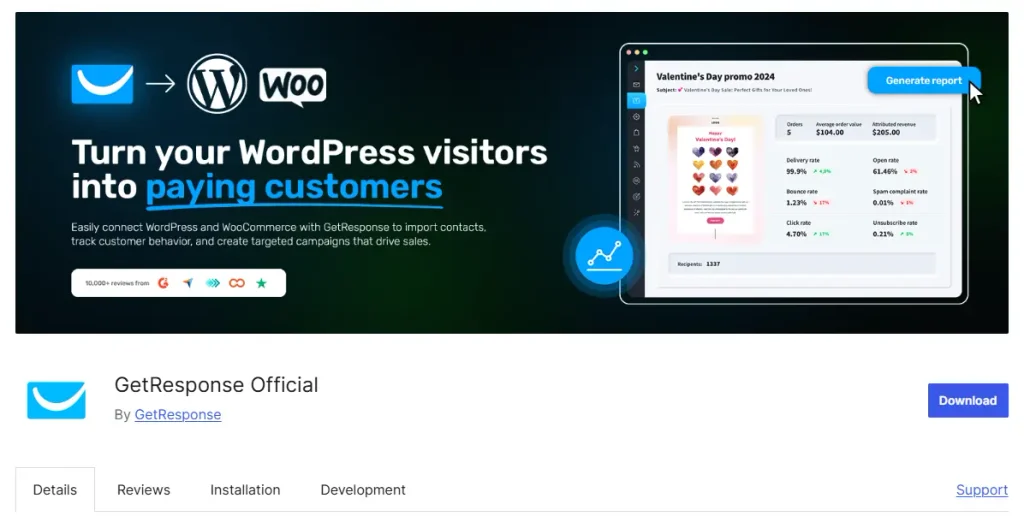
Almost nothing else on this list hosts webinars natively. GetResponse does, bundled into specific plan tiers alongside email automation and ecommerce tools. If webinars are genuinely part of how you sell, that’s a real reason to look here that has nothing to do with price.
If webinars aren’t part of your plan, be honest before paying for that tier. The Ecommerce Marketing plan costs more per year than several flat-rate alternatives here.
What GetResponse Bundles That Others Don’t
- Webinar hosting, gated by plan tier, but genuinely included.
- Ecommerce Marketing tier automation, covering cart and product-recommendation sequences.
- Built-in funnel builder alongside standard email campaigns.
- AI campaign generator for drafting subject lines and copy.
Good to know: the base Email Marketing plan doesn’t include webinars. Confirm which tier actually includes them before committing.
Pros and Cons of GetResponse
| Pros | Cons |
|---|---|
| Webinar hosting bundled at specific tiers | Webinar access is plan- and attendee-cap-gated |
| Ecommerce tier includes useful cart-recovery automation | Base plan doesn’t include webinars at all |
| Built-in funnel builder alongside email | Contact data lives on GetResponse’s servers |
| AI campaign generator included | Ecommerce tier costs more than flat-rate alternatives |
GetResponse Pricing
| Free | Starter | Marketer | Ecommerce Marketing |
|---|---|---|---|
| Up to 500 contacts | ~$16/mo | ~$48/mo | ~$56-$120/mo by contacts |
Quick Comparison: GetResponse vs Ontraport
Ontraport has no equivalent to GetResponse’s webinar hosting.
| GetResponse | Ontraport | |
|---|---|---|
| Best for | Email plus webinars in one platform | CRM-heavy sales and marketing combined |
| WooCommerce data | Via plugin | Via sync/integration |
| Webinar hosting | Included on specific tiers | Not available |
| Entry price | Free (500 contacts) | $1,350/year (Plus, 1,000 contacts) |
| Ecommerce automation | Solid, on Ecommerce tier | High, CRM-integrated |
| CRM & sales pipeline | Not included | Included |
Bottom Line: GetResponse earns its place specifically because of webinars. Outside that, its ecommerce automation is solid but not a dramatic upgrade.
Good to Know: If the funnel side appeals more than the webinar side, our breakdown of building an email marketing funnel is worth reading alongside this comparison.
If price is still the sticking point, the next tool’s free tier is worth a closer look.
9. EngageBay – A Genuinely Usable Free Tier
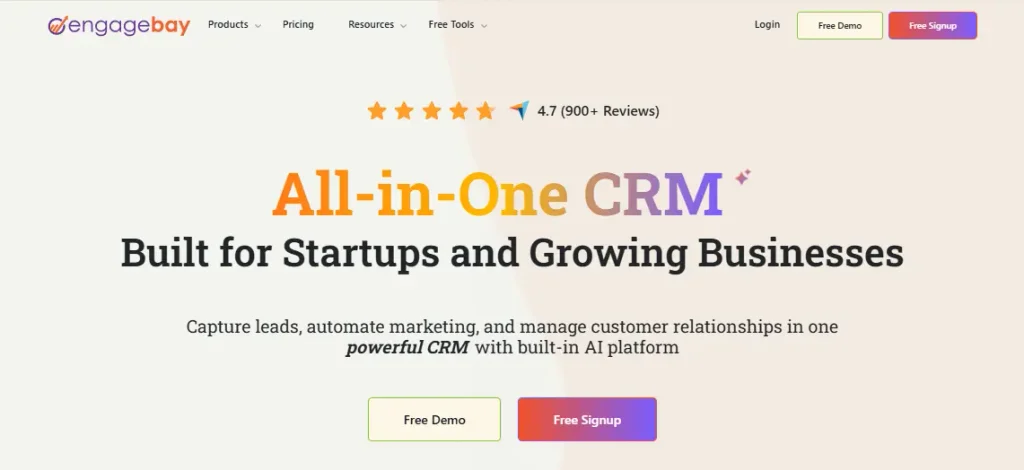
Most free plans on this list are limited trials wearing a “free forever” label. EngageBay’s is closer to the real thing: a combined CRM, helpdesk, and email marketing tool at $0.
The honest limitation shows up once you grow. Automation and segmentation depth is lighter than Ontraport’s, and pricing scales with both contacts and users, which adds up faster for a small team.
What EngageBay Includes in Its Free Tier
- CRM, helpdesk, and live chat, included at no cost.
- Lead scoring, unlocked past the free tier.
- Marketing automation, at the Growth tier and above.
- Custom reporting and web analytics on the Pro tier.
Remember: “free” here means CRM plus helpdesk plus email together, a wider bundle than most competitors offer at zero cost.
Pros and Cons of EngageBay
| Pros | Cons |
|---|---|
| Genuinely usable free plan combining CRM, helpdesk, and email | Automation depth lighter than Ontraport’s at comparable tiers |
| Affordable per-user pricing at lower tiers | Costs scale with both users and contacts |
| Includes helpdesk and live chat most email-only tools skip | Free plan capped at 250 contacts |
| Straightforward setup for a first CRM | Less suited to complex, conditional automation |
EngageBay Pricing
| Free | Basic | Growth | Pro |
|---|---|---|---|
| Up to 250 contacts | ~$14/mo | ~$60-65/mo (5,000 contacts) | ~$110-120/mo (10,000 contacts) |
All paid tiers are priced per user.
Quick Comparison: EngageBay vs Ontraport
Both bundle CRM with marketing, but the price gap at entry level is wide.
| EngageBay | Ontraport | |
|---|---|---|
| Best for | Free all-in-one CRM for an early-stage store | CRM-heavy sales and marketing combined |
| WooCommerce data | Via native CRM | Via sync/integration |
| Entry price | Free (250 contacts) | $1,350/year (Plus, 1,000 contacts) |
| CRM & sales pipeline | Included, free tier | Included |
| Automation depth | Basic to moderate | High |
| Billing model | Per user + per contact | Per contact + per user |
Bottom Line: EngageBay is the right pick for Ontraport’s “everything together” philosophy at a fraction of the price, trading some automation sophistication to get there.
Good to Know: if CRM plus email together is the goal, not a specific brand, our guide to WooCommerce email marketing covers what to look for regardless of platform.
One channel none of these tools handle well is SMS built genuinely alongside email, not bolted on. That’s the last alternative here.
10. Omnisend – SMS and Push Built Alongside Email, Not After It

A lot of platforms added SMS once it became expected. Omnisend built its automation flows around SMS, email, and push from the start, so a single workflow can text, then email, then push, all as branches of one sequence.
Ontraport has no real equivalent. It doesn’t offer native SMS or push at any tier, so multichannel outreach is ground it simply doesn’t cover.
How Omnisend Handles SMS and Push Alongside Email
- Pre-built ecommerce workflows for cart recovery, browse abandonment, and post-purchase.
- WooCommerce-specific segmentation, built around order and product data.
- AI-assisted forms and reporting.
- Unlimited push notifications on paid tiers.
Good to Know: SMS carries a variable cost in credits. Push doesn’t, making it the cheaper multichannel add-on if budget is tight.
Pros and Cons of Omnisend
| Pros | Cons |
|---|---|
| SMS, email, and push built natively into the same workflows | Contact limits per tier run lower than several competitors |
| Ecommerce-specific automation out of the box | No CRM or sales-pipeline features |
| AI tools for forms and reporting included on paid tiers | SMS pricing adds a variable cost on top of the base plan |
| Unlimited push notifications on paid tiers | Customer data lives on Omnisend’s platform |
Omnisend Pricing
| Free | Standard | Pro |
|---|---|---|
| Up to 250 contacts | ~$11/mo (500 contacts) | ~$41/mo (2,500 contacts) + SMS credits |
Quick Comparison: Omnisend vs Ontraport
| Omnisend | Ontraport | |
|---|---|---|
| Best for | Multichannel SMS, email, and push automation | CRM-heavy sales and marketing combined |
| WooCommerce data | Native extension | Via sync/integration |
| SMS & push | Built in natively | Not available |
| Entry price | Free (250 contacts) | $1,350/year (Plus, 1,000 contacts) |
| Automation depth | Strong, ecommerce-specific | High, pipeline-oriented |
| CRM & sales pipeline | Not included | Included |
Bottom Line: Pick Omnisend when SMS and push genuinely matter, not as a nice-to-have.
Good to Know: if channel mix itself is what you’re weighing, our look at transactional versus marketing email is a useful frame.
That covers all ten alternatives. Here’s what each one actually replaces from Ontraport’s bundle.
What Does Each Ontraport Alternative Replace?
Ontraport combines CRM, email marketing, sales pipelines, landing pages, and automation in one platform. No single alternative on this list replaces all of its features, so the right choice depends on which functions you actually need.
| Tool | Email Marketing & Automation | CRM & Sales Pipeline | Landing Pages & Funnels | WooCommerce Order Automation |
|---|---|---|---|---|
| Mail Mint | Yes | Not included | Via WPFunnels | Native |
| ActiveCampaign | Advanced automation | Yes | Basic | Via integration |
| Klaviyo | Ecommerce-focused | Limited | Not included | Native extension |
| HubSpot | Yes | Yes, including free CRM | Yes | Via integration |
| Keap | Yes | Yes | Yes | Via integration |
| Constant Contact | Yes | Basic | Basic | Via plugin |
| Brevo | Yes | Yes | Yes | Via WooCommerce plugin |
| GetResponse | Yes | Basic | Yes | Via plugin |
| EngageBay | Yes | Yes | Yes | Via integration |
| Omnisend | Ecommerce-focused | Limited | Basic | Native extension |
Mail Mint and other ecommerce-focused platforms handle WooCommerce email automation directly, while tools like HubSpot, Keap, and EngageBay offer broader CRM and sales pipeline features instead.
Side-by-Side Feature Comparison of Ontraport Alternatives
Each tool handles WooCommerce a little differently. Some read your store’s data directly, while others connect through an integration.
| Tool | WooCommerce Data Access | Free Plan | Automation Depth | CRM Included |
|---|---|---|---|---|
| Mail Mint | Native, direct reads | Yes | Order-status and behavior triggers | No |
| ActiveCampaign | Via integration | No | Deep, conditional branching | On higher tiers |
| Klaviyo | Native extension | Yes, to 250 profiles | High, ecommerce-specific | No |
| HubSpot | Via certified integration | Yes (CRM) | High, pipeline-oriented | Yes (free tier) |
| Keap | Native | No | High, sales + marketing combined | Yes |
| Constant Contact | Via plugin | No | Moderate | No |
| Brevo | Via plugin | Yes, unlimited contacts | Standard | No |
| GetResponse | Via plugin | Yes, to 500 contacts | Solid on Ecommerce tier | No |
| EngageBay | Native (own CRM) | Yes, to 250 contacts | Basic to moderate | Yes |
| Omnisend | Native extension | Yes, to 250 contacts | Strong, ecommerce-specific | No |
Side-by-Side Pricing Comparison of Ontraport Alternatives
The entry price rarely tells the whole story. What matters is what you’ll pay once your list is the size it’ll actually be in a year.
| Tool | Entry Price | Price at Meaningful Scale |
|---|---|---|
| Ontraport | $1,350/year (Plus, 1,000 contacts) | $3,560/year (Plus, 10,000 contacts) |
| Mail Mint | Free | $149.99/year, any list size |
| ActiveCampaign | No free plan | ~$948/year (1,000 contacts) |
| Klaviyo | Free (250 profiles) | ~$1,800/year (10,000 profiles) |
| HubSpot | Free CRM | ~$9,600/year + $3,000 onboarding |
| Keap | No free plan | $2,988/year base |
| Constant Contact | No free plan | ~$816/year (Premium) |
| Brevo | Free (unlimited contacts) | Scales with send volume |
| GetResponse | Free (500 contacts) | ~$1,440/year (Ecommerce tier) |
| EngageBay | Free (250 contacts) | ~$1,440/year (10,000 contacts) |
| Omnisend | Free (250 contacts) | ~$492/year + SMS credits |
That table shows where every tool lands. The next section does the actual math on what switching to Mail Mint specifically saves over time.
How Much You Save With Mail Mint Over Time
Ontraport combines CRM, email marketing, funnels, and automation in one platform. For a WooCommerce store, Mail Mint paired with WPFunnels can cover the email automation, funnel, and landing-page needs at a fixed annual cost.
Mail Mint + WPFunnels Stack Cost
The Mail Mint + WPFunnels stack costs $279.98/year: $149.99 for Mail Mint Starter and $129.99 for WPFunnels. Unlike Ontraport, the stack does not increase in price as your contact list grows.
| WordPress Stack Component | Cost Per Year |
|---|---|
| Mail Mint Starter | $149.99 |
| WPFunnels | $129.99 |
| Total | $279.98 |
That’s the annual cost for the complete stack. Here’s how it compares with Ontraport’s Plus plan at different contact levels.
Ontraport vs Mail Mint Stack: 1-Year Cost
| Contact List | Ontraport (Plus) | Mail Mint + WPFunnels | Difference |
|---|---|---|---|
| 1,000 contacts | $1,350 | $279.98 | ~$1,070 |
| 2,500 contacts | $1,770 | $279.98 | ~$1,490 |
| 10,000 contacts | $3,560 | $279.98 | ~$3,280 |
| 20,000 contacts | $5,760 | $279.98 | ~$5,480 |
At 1,000 contacts, the stack costs about $1,070 less in the first year. The gap gets larger as the contact list moves into higher Ontraport pricing tiers.
Ontraport vs Mail Mint Stack Over Time
The Mail Mint stack stays at $279.98/year regardless of list size, while Ontraport’s cost depends on the contact tier and stays fixed only if your list doesn’t grow.
| Years of Use | 1,000 Contacts | 2,500 Contacts | 10,000 Contacts | 20,000 Contacts |
|---|---|---|---|---|
| 1 year | ~$1,070 | ~$1,490 | ~$3,280 | ~$5,480 |
| 2 years | ~$2,140 | ~$2,980 | ~$6,560 | ~$10,960 |
| 3 years | ~$3,210 | ~$4,470 | ~$9,840 | ~$16,440 |
| 4 years | ~$4,280 | ~$5,960 | ~$13,120 | ~$21,920 |
| 5 years | ~$5,350 | ~$7,450 | ~$16,400 | ~$27,400 |
Key Takeaway: At 1,000 contacts, the Mail Mint + WPFunnels stack saves about $1,070 in the first year and ~$5,350 over five years compared with Ontraport’s Plus plan. At higher contact tiers, the gap grows because the stack’s price is fixed while Ontraport’s isn’t.
Ontraport moves you into higher pricing tiers as your list grows. The stack’s price doesn’t move at all, which is exactly why the gap widens rather than staying flat.
Remember: For a business that genuinely runs a sales pipeline alongside its store, tracking deals, managing a sales team’s outreach, that’s a real function you’d be giving up, not just a minor inconvenience. Worth naming plainly rather than glossing over.
With the cost side settled, the next question is which specific situation you’re actually in.
Best Ontraport Alternatives for Specific Use Cases
People switch from Ontraport for different reasons. Some need better ecommerce segmentation, while others want a simpler CRM or more ways to reach customers. Here’s where each option fits best.
Best for Native WooCommerce Automation at a Flat Cost
Mail Mint works directly inside WordPress and WooCommerce, with tools for order-based automation, abandoned cart recovery, and post-purchase emails. It also comes with unlimited contacts, making it a practical option when your Ontraport costs keep increasing as your contact list grows.
Best for Deep Ecommerce Segmentation and Predictive Data
Klaviyo gives you more ways to segment customers based on their actual behavior. You can use data such as purchase history, predicted lifetime value, and churn risk to create more targeted campaigns.
Best for Combining Email With a Genuinely Free CRM
HubSpot gives you a free CRM alongside its email and marketing tools. You can manage sales pipelines and customer information without paying for the core CRM. This can be useful if your business also handles wholesale inquiries, B2B accounts, or sales-assisted deals.
Best for SMS and Push Alongside Email
Omnisend brings email, SMS, and push notifications into the same workflows. You can use multiple channels within a single customer journey, which makes it useful when SMS and push are already part of your marketing strategy.
How Hard Is It to Switch From Ontraport?
Switching from Ontraport takes some planning, but most of the work is rebuilding your existing automations and workflows. Your contacts can be exported from Ontraport and imported into the new platform, while automations and other assets usually need to be recreated.
| Ontraport Asset | Can You Move It? | Typical Replacement |
|---|---|---|
| Contact list | Yes | CSV export and import into the new platform |
| Email templates | Partially | Rebuild in the new builder, formatting rarely carries over cleanly |
| Automation/workflow logic | No | Recreate manually in the new platform’s builder |
| CRM deal/pipeline data | Yes, via CSV | Import into a CRM-equivalent tool if replacing that function |
| Landing pages | No | Rebuild in the new builder |
| Membership site content | Partially | Depends on the target platform’s members |
The migration itself follows a predictable sequence:
- Export your full contact list from Ontraport as CSV before touching anything else.
- Document every active automation (trigger, delay, condition, email) in a simple spreadsheet.
- Set up your new platform’s account and import the contact CSV.
- Rebuild your highest-priority automation first, usually cart recovery, and test it with a real test order.
- Run both systems in parallel for one full order cycle to confirm the new automation fires correctly.
- Once confirmed, turn off the matching Ontraport automation and repeat for the next one.
Bottom Line: budget a few hours per automation, not a few minutes, and never cancel Ontraport until the replacement has proven itself on at least one real order cycle.
It’s Time to Choose the Right Ontraport Alternative
Choosing an Ontraport alternative depends on what you want to change and what your business actually needs.
Some businesses may want a simpler email marketing setup, while others may need stronger ecommerce automation, deeper customer segmentation, better CRM features, or more flexibility as their business grows.
Mail Mint is a good fit for stores focused on email marketing and WooCommerce automation. Klaviyo is built for deeper ecommerce data and segmentation, while HubSpot and Keap bring stronger CRM and sales management into the picture. Tools like Constant Contact and Brevo offer a simpler approach to email campaigns and automation.
Before making the switch, take a close look at your current workflows, the features you actually use, and the problems you want the new platform to solve.
If you’re looking for a simpler way to manage email marketing and WooCommerce automation, Mail Mint is worth trying.
Ready to Give Mail Mint a Try?
Bring your email marketing, automation, and WooCommerce campaigns together in WordPress. Start with unlimited contacts and build campaigns that help turn more customers into repeat buyers.
Frequently Asked Questions
What is Ontraport?
Ontraport is an all-in-one business automation platform combining CRM, email marketing, landing pages, and membership site tools, founded in 2006 and aimed at businesses running a sales pipeline alongside their marketing.
What’s the best Ontraport alternative for a WooCommerce store in 2026?
It depends on what’s actually driving the switch. For native WooCommerce automation at a flat cost, Mail Mint is the closest match. For deep ecommerce segmentation, Klaviyo. For a full CRM and sales pipeline alongside email, HubSpot’s free tier or Keap.
Is Ontraport worth it for a small WooCommerce store?
It can be, if you’re genuinely running a multi-stage sales pipeline alongside your store. For a single-store owner whose main need is cart recovery and post-purchase email, you’re likely paying for CRM depth you won’t use.
What’s the cheapest or most affordable Ontraport alternative for a WooCommerce store?
On a flat-cost basis, Mail Mint is the cheapest at scale: $149.99/year with no contact ceiling, versus platforms that charge monthly and grow with your list size. Brevo, Omnisend, and EngageBay can be cheaper at very low contact counts on their free tiers.
Can I switch from Ontraport without losing my subscribers?
Yes. Every alternative on this list supports importing your existing contact list, typically via CSV export and import. Rebuilding your automations takes longer and should be tested in parallel before you turn off the Ontraport versions.
Do any of these alternatives include a sales CRM the way Ontraport does?
HubSpot’s free tier and Keap both include a genuine CRM and sales pipeline. EngageBay includes a lighter CRM at a much lower price. Mail Mint, Klaviyo, ActiveCampaign, Brevo, GetResponse, and Omnisend are email/automation-first tools without a built-in sales pipeline.

Comments are closed.





Comments (2)
I have been using ActiveCampaign for a few years and I am pleased with the functionality and the appealing price point.
Thanks for sharing this amazing blog.
ActiveCampaign Certified
Thank you for your kind words! Keep in touch, Kennie.