
It’s been many years since I started helping eCommerce brands grow revenue, and I’ve learned one simple truth: increasing your Average Order Value (AOV) is usually easier than getting new customers.
According to statistics, acquiring a new customer can cost 5 to 25 times more than retaining an existing one.
Most store owners focus heavily on ads and acquisition. But in my experience, small AOV improvements often generate faster and safer profit.
I’ve reviewed stores where a simple bundle or checkout upsell lifted revenue within weeks. The key wasn’t product categories – it was understanding the buying situation.
So in this guide, I’ll keep it practical. You’ll see the real types of upselling based on how customers actually buy and how you can use it for your ecommerce growth.
Let’s get started,
TL: DR – Types of Upsell Offers for eCommerce Revenue Growth
- Upselling can increase your revenue without getting more traffic.
- It simply increases your average order value (AOV) without more acquisition cost.
- 5 effective upsell types:
- Premium Upgrade – Increase order value with higher-priced versions.
- Bundle Offer – Grow cart size with complementary products.
- Protection Add-On – Add high-margin extras like a warranty.
- Buy More Save More – Increase quantity per order.
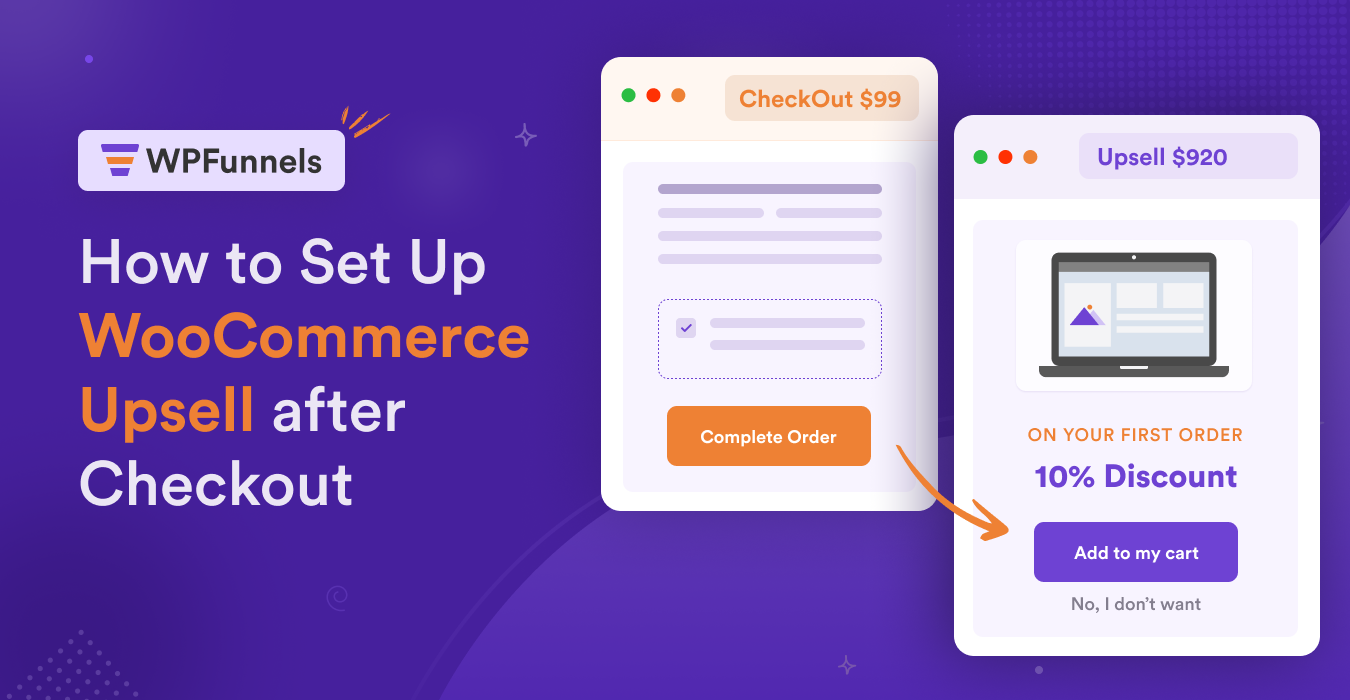
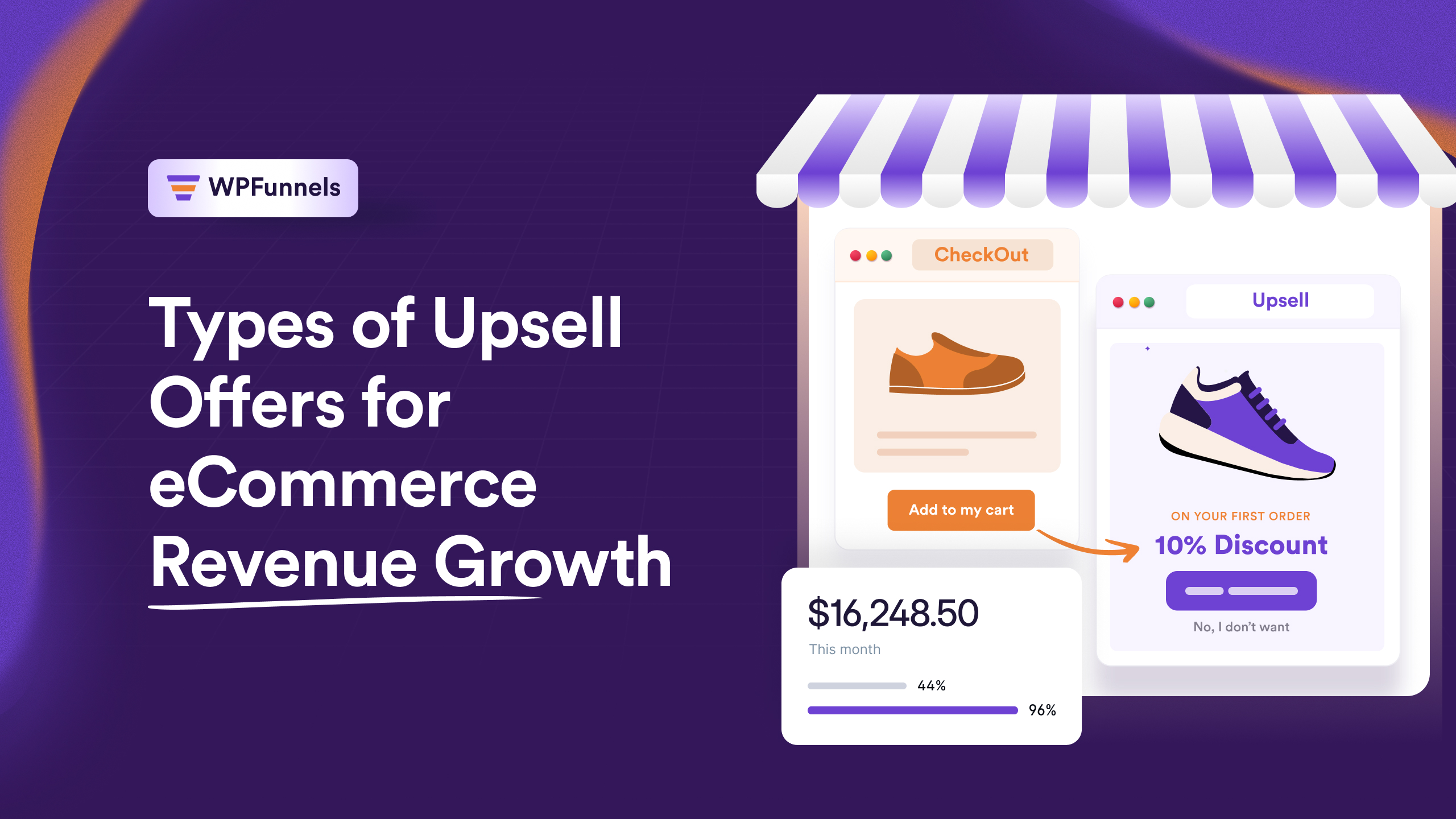
- Post-Purchase One-Click Upsell – Capture extra revenue after checkout.
- You can use them in the product page, cart page, checkout page, and after checkout
- Final Verdict: Post-Purchase One-Click Upsell works best because customers have already decided to buy.
5 Types of Upselling Tactics Based on Real Buying Scenarios
Most guides explain eCommerce upselling by product type. But customers don’t buy in “categories.” They buy in situations.
Here are the 5 buying scenarios that actually drive higher order value.
1. The Premium Upgrade Upsell (When Customers Want Better Value)
This works when customers are already comparing options. You can offer a better version of the same product:
- Larger phone screen
- Premium material version
- Higher storage model
- Advanced feature edition
This type of upselling works best when:
- The customer is in comparison mode
- The price difference is within 25%
- The value difference is clearly explained
For example, if a $200 product has a $240 premium version with stronger material and extended durability, many buyers will upgrade.
Why? Because they’re already spending money and upgrading feels rational. When you can implement this strategy correctly, this type alone can significantly boost AOV.
2. The Bundle Expansion Upsell (When Customers Need Complements)
Let me tell you something I see all the time.
You add “related products” under the main item and hope the customer adds them. That’s not a strong upsell. That’s passive cross-selling.
A bundle expansion upsell is different. Instead of hoping the customer figures out what else they need, you decide for them – logically and helpfully.
Here’s what I mean.
A bundle expansion upsell:
- Combines the main product with necessary add-ons
- Increases total order value
- Makes the purchase feel complete
You’re not just selling more. You’re making the buying decision easier.
Let’s look at simple examples:
- Camera + lens + memory card (no one wants to realize later they forgot storage)
- Laptop + bag + wireless mouse (ready-to-use setup)
- Skincare kit instead of a single product (complete routine)
When I test this with stores, I often see customers choose the bundle because it feels smarter. They think: “I might as well get everything now.”
It works especially well:
- On the product page (before they decide)
- On the cart page (when they’re reviewing items)
Now here’s the key difference.
Cross-selling suggests related products separately. Bundle expansion packages them together strategically so the customer increases cart value in one simple decision.
Instead of: “Do you also want this? And this? And this?”
You’re saying: “Here’s the complete version. One click.”
That’s cleaner. That converts better.
3. The Protection & Service Upsell (When Risk Is High)
Let me be honest with you.
Whenever I audit a store selling expensive products, this is the first thing I check – are you offering protection?
Because when someone buys electronics or any high-ticket item, they’re not just thinking about features. They’re thinking: “What if something goes wrong?”
That’s where this upsell becomes powerful.
You can offer:
- Extended warranty
- Installation service
- Priority support
- Protection plan
- Service upgrade
For example, if someone buys a $900 washing machine and you offer a 2-year extended warranty for $79, many will say yes.
Why? Because at that moment, peace of mind feels cheap.
And here’s what I’ve seen repeatedly – this type of upsell doesn’t feel pushy. It feels responsible.
You’re not forcing a bigger purchase. You’re reducing risk. That builds trust. And the best part is that you increase revenue without giving heavy discounts.
I’ve seen stores add thousands in extra monthly revenue just from protection plans alone.
Even SaaS companies use this model. They offer premium support, faster response times, and advanced features as a paid service upgrade.
Why does it work? Because it’s a proven sales technique built on psychology. When fear is high, reassurance sells.
If you’re selling anything expensive and not offering protection, you’re leaving easy money on the table while your customer is silently worrying.
And worried customers hesitate. Protected customers buy confidently.
4. The Volume & Threshold Upsell (When Customers Are Price-Sensitive)
This works for stores selling:
- Supplements
- Beauty products
- Consumables
You encourage greater quantities by offering an incentive.
Examples:
- Buy 2, save 10%
- Buy 3, save 15%
- Free shipping over $75
Instead of discounting one product heavily, you guide customers to spend slightly more. This increases cart value and results in higher sales per transaction.
5. The Post-Purchase One-Click Upsell (When Buying Momentum Is High)
This is one of my favorite strategies. After checkout, you show a special upsell offer. Because the customer already paid, they’re more likely to say yes again.
And since it’s one click, there’s no friction.
- If you use WooCommerce, you can easily set one click upsell after checkout
This type of upselling does not interrupt checkout, which keeps conversions safe.
Where to Implement These Types of Upselling in WooCommerce
As you’re running a WooCommerce store, placement is just as important as the upsell itself. Even the best offer can fail if shown at the wrong stage
Let’s break it down and see how you can do this on the product page, cart page, checkout, and even after checkout.
1. Product Page
This is where your customer is still deciding, and their mindset is: “Should I buy this or a better version?”
- Premium product comparison: Show Basic vs Premium clearly. I like to display a simple side-by-side table so users instantly see why upgrading makes sense.
- Highlight the upgraded product’s benefits: Don’t just show a price difference. Explain why it’s better – more features, longer durability, or added convenience. This builds trust and encourages users to upgrade.
- Product customization (if relevant): If you offer color, material, or feature upgrades, this is the perfect place. I’ve seen even small options increase perceived value and encourage users to spend a little more before they commit.
Think of the product page as your chance to guide the user toward the right types of upsells before they even add anything to the cart.
2. Cart Page
By the time someone reaches the cart, they’ve already said “yes” to the purchase. Their mindset is: “Okay, I’m buying this… what else makes sense?”
- Bundle suggestions: Suggest complementary products logically. For example, if they’re buying a camera, show a lens and memory card bundle. It feels helpful rather than pushy and increases cart value.
- Encourage greater quantities: If you sell consumable products, suggest buying two or three instead of one. A small incentive, like “Buy 3 and save 10%,” can significantly boost order size.
- Spend-based incentive: Show messages like “You’re $12 away from free shipping.” I use this trick often; it motivates the user to add more without feeling pressured.
Cart page upsells work because the customer is already committed. You’re just helping them make a smarter, more complete purchase.
3. Checkout Page
Checkout is high-intent but low-patience. Users want to finish quickly, so you have to keep things simple.
- Small add-ons: Offer inexpensive accessories that complement the selected product. Users can add them in a single click without thinking too much.
- Protection plan: Suggest extended warranties or protection plans for high-ticket items. I always frame this as “peace of mind,” so it feels responsible, not pushy.
- Service upgrade: Options like faster shipping or installation can work here. Keep it clear and simple to avoid overwhelming the user.
Think of the checkout page upsells as the last gentle nudge, something that adds value without slowing them down. You can also implement an order bump here before checkout to increase your AOV.
4. After Checkout
Once checkout is complete, the user’s momentum is high. They’ve already said “yes,” so now is the perfect time to maximize revenue with minimal friction.
- One-click upsell flow: Offer a special product immediately after checkout. No payment re-entry is required, which keeps it simple and frictionless.
- Limited-time exclusive offer: Show a deal that’s only available right now. Because the user is still in a buying mindset, acceptance rates are surprisingly high.
This stage is like picking the fruit after it’s ripe; you’re simply helping the customer get more value while increasing your revenue
Best Practices for Implementing Different Types of Upselling
If you’re just getting started with upselling, don’t worry – I was there too. There are a few simple rules I always follow that make the process easier and more effective.
1. Relevance
Your upsell must match the selected product. For example, if someone is buying a camera, don’t show them kitchen appliances.
I’ve seen beginners make this mistake, and it immediately reduces trust. Your goal is to help the user get more value, not confuse them.
2. Clear Value
Always explain why the upgraded product is better. Don’t just show a higher price. Show them why it’s worth it:
- Better features
- Longer durability
- Improved experience
I usually phrase it like, “Here’s what you get with the premium version that makes it worth the upgrade.” It makes the decision easy for the customer and builds confidence.
3. Keep Price Gap Reasonable
A big price jump scares ecommerce store visitors. I aim to keep the difference within 20–25%. Small, logical increases convert better and feel fair to the user. A well-designed ecommerce checkout process reinforces this trust by presenting pricing, shipping costs, and optional add-ons transparently, reducing friction and helping customers complete their purchases with confidence.
Remember: it’s about helping the user get more value, not shocking them with a huge number.
4. Focus on Long-Term Value
Upselling isn’t just about today’s revenue.
It helps improve:
- ARPU (Average Revenue Per User)
- CLTV (Customer Lifetime Value)
When users buy better products or bundles, they tend to stick around longer. This is how you grow your existing customer base without constantly chasing new prospects.
Real-World Examples for Different Types of Upselling
Let’s make this simple so you can picture it in your own store.
Electronics Store:
When a customer picks a basic laptop, you can suggest the premium version with better RAM for just a little more.
Most buyers will upgrade, and that instantly boosts AOV. This is one of the easiest ways for you to earn more from the same traffic.
Fashion Store:
If someone adds a shirt to their cart, you can show a “Complete the Look” bundle with pants or accessories.
Customers often take it, which increases cart value without feeling pushy. You’ll notice how a small suggestion can make a big difference.
Home Appliance Store:
When a customer buys a refrigerator, you can offer an extended warranty. This adds extra revenue without giving a discount, and it makes your customer feel secure about their purchase. It’s an easy way for you to increase trust and sales at the same time.
Supplement Brand:
If someone buys just one protein jar, you can offer “Buy 3 and save” to encourage greater quantities. This naturally increases sales per transaction, and it works for almost any consumable product. You’ll see how small nudges like this can add up fast.
Conclusion
Upselling doesn’t have to feel complicated or pushy. It’s simply helping your customers get more value from their purchase.
The key is to offer the right upsell at the right time – product page, cart, checkout, or after checkout. This way, you can naturally increase AOV and boost your store’s revenue.
Start small and test one or two upsells at first. Focus on relevance, clear value, and reasonable price gaps to keep customers happy.
If you want a simple way to implement this, try a one-click upsell after checkout. It’s easy to set up and can add extra revenue without interrupting the buying flow.
** FAQs **
What are the most effective types of upselling for WooCommerce stores?
You’ll get the best results when your upsell actually helps your customer. Premium upgrades, bundle expansions, and protection/service offers usually work best because they add real value and naturally boost AOV.
How do types of upselling differ from cross-selling?
Think of upselling as helping your customer get a better version of what they already want. Cross-selling is different – it suggests related products separately, like offering a camera bag when they’re buying a camera. You want upsells to feel like a smart choice, not a random push.
Which types of upsell increase AOV the fastest?
If you want quick wins, focus on premium upgrades and bundle expansions. Post-purchase one-click upsells can also help to get revenue fast because your customer is already in a buying mindset – no extra effort needed.
Where should I place upsell offers in WooCommerce?
Placement is everything. Show upsells where your customer is ready to make a decision: Product page, cart page, checkout, or right after checkout. Matching the offer to the user’s mindset is what actually converts.
Can upselling reduce conversions if done incorrectly?
Yes, if your offers feel random, pushy, or irrelevant, you risk losing the sale. Keep it relevant, clear, and simple so your customer feels like you’re helping them, not just trying to make more money.